
Search
Log in

Type of project: BSc/MSc Thesis/Internship
Duration: 5-7 months, starting from June 2026
Location: Wetsus, European centre of excellence for sustainable water technology, Leeuwarden, the Netherlands
Allowance: The maximum Wetsus allowance for this internship is 425 € per month. Grant holding students (i.e. Erasmus or other) receiving financial support of less than 425 € per month can apply for a top-up supplement to the maximum allowance.
Project Background
Synthetic flocculants such as polyacrylamide are widely used in (waste)water treatment due to their good flocculation capacity. The flocculation capacity of synthetic flocculants is mainly due to their properties like high molecular weight and charge density. However, synthetic flocculants derived from fossil fuels result in environmental issues like high carbon footprint and potential eco-toxicity. Extracellular polymeric substances (EPS), biodegradable microbially-secreted polymers in wastewater treatment processes, have similar properties to synthetic flocculants. Therefore, EPS is considered a green alternative to synthetic flocculants.
Tracking flocs formation and growth is essential for optimizing the flocculation process in terms of mixing speed, mixing duration and settling. Moreover, previous studies mainly focused on the flocculation performance of EPS—specifically colloid removal—while two key questions remain unclear: (1) how EPS properties influence flocs formation and growth and, (2) how EPS interacts with different types of colloids. These knowledge gaps constrain the scale-up and development of EPS as bioflocculants. Addressing these two questions will provide deeper insight into EPS-driven flocculation and support the production and application of EPS.
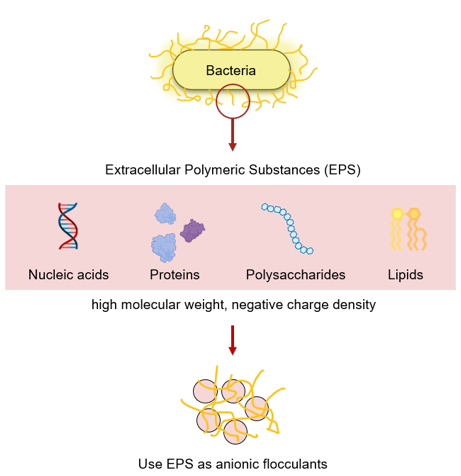
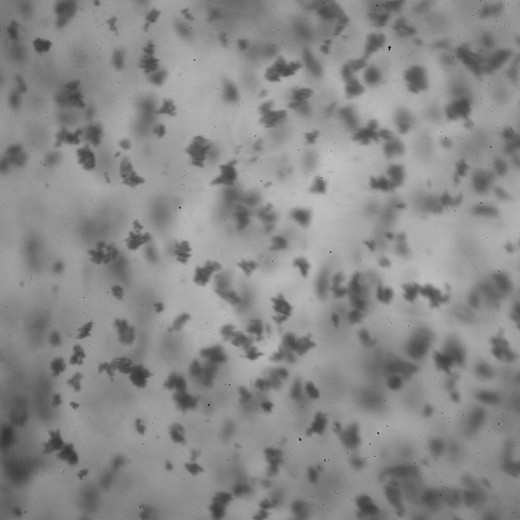
The student joining this project will conduct flocculation tests in various colloidal suspensions with different EPS as flocculants. The student will then monitor flocs formation and growth in EPS- induced flocculation through an in-situ imaging setup and optimize an existing program to analyze images of flocs. This intern/thesis project is a part of the PhD research of Bohan Chen. The outcome of this project is expected to understand the EPS flocculation process, particularly flocs formation and growth, and to enhance the EPS-driven flocculation performance.
Your task
• Conduct flocculation tests in various colloidal suspensions with different EPS
• Acquire flocs images in an in-situ imaging setup
• Optimize an existing program to analyze the acquired images
• Write a final report/thesis of this project
Your profile
• Background in Environmental Engineering/Chemical Engineering/Data Science or related fields
• Enrolment in an EU university, for non-EU residents, enrollment in a Dutch university is obligatory
• Knowledge and experience in Python
• Great interest in flocculation, image analysis, and programming
• Highly motivated, responsible, and willing to learn about flocculation
• Fluent in English and good English writing skills
• Experience in image analysis will be a plus
How to apply
Please upload two files: