
Search
Log in

Type of project: BSc/MSc Thesis/Internship.
Anticipated start time: Starting September 2026 or later.
Duration: At least 6 months.
Location: Wetsus, European centre of excellence for sustainable water technology, Leeuwarden, NL.
Allowance: The maximum Wetsus allowance for this internship is 425 € per month. Grant holding students (i.e. Erasmus or other) receiving financial support of less than 425 € per month can apply for a top-up supplement to the maximum allowance.
Project description:
Lithium is an essential element for batteries and renewable energy technologies. In natural and industrial brine streams, lithium is typically present together with much higher concentrations of competing ions, such as sodium (Na⁺).
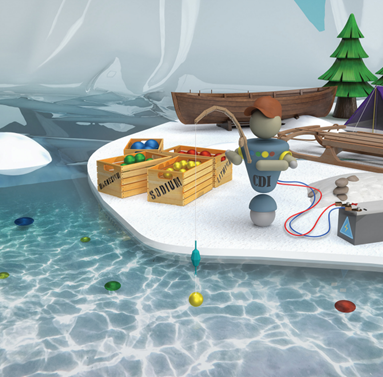
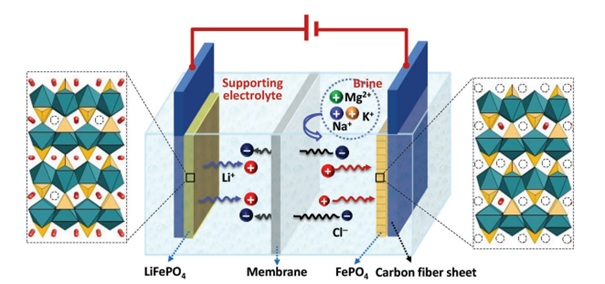
Capacitive Deionization (CDI) is an electrochemical separation technique that operates at low voltage and without chemical additives, making it attractive for sustainable ion separation. When combined with intercalation-type electrode materials such as lithium iron phosphate (LiFePO₄, LFP), CDI shows potential for selective lithium uptake from mixed-ion solutions. However, in practice, selectivity strongly depends on operating conditions.
The objective of this project is to experimentally study and improve the selective removal of lithium from mixed-ion solutions, focusing on lithium–sodium systems. The project will investigate how operational parameters influence lithium selectivity and system performance.
The student will work within a predefined experimental framework. The overall research direction, experimental strategy, and interpretation approach are determined by the supervisor.
The student’s role is to execute experiments, collect and analyze data, and contribute to performance evaluation.
Candidate Tasks:
• Running CDI experiments using LFP electrodes.
• Preparing and testing aqueous salt solutions containing lithium and competing ions (primarily Na⁺).
• Running predefined experimental protocols while varying operational parameters such as current density, cycle duration, and rest periods.
• Collecting influent and effluent samples during experiments.
• Analyzing ion concentrations (e.g. Li⁺ and Na⁺) using established analytical techniques.
• Organizing, processing, and visualizing experimental data.
Expected outcomes:
• Identify operational parameters that enhance lithium selectivity in mixed-ion systems.
• A consistent experimental dataset.
• Practical insights that support further optimization of CDI-based lithium separation.
Your profile:
• Master or Bachelor’s student with a background in chemical engineering, (analytical) chemistry, Water technology, or Materials science, or Environmental engineering/science.
• EU citizen or non-EU citizen already enrolled in a Dutch university.
• Fluent in English (speaking, writing, and communication skills).
• Interest in practical laboratory experience and analytical work.
• Preferred skills: (Electro)chemistry and chemical laboratory experience.
How to apply:
Interested students are invited to send a motivation letter (max. 1 page) and a CV (max. 2 pages) via the application form below. For more information you can email Hanieh Geranikolahlooei (Hanieh.geranikolahlooei@wetsus.nl)