
Menu

predicting
and measuring microbial composition and activity in non-chlorinated drinking water

Type of project: MSc internship or thesis

Duration: 4-6 months

Start date: July  2026

Location: Wetsus, European Centre of Excellence for Sustainable Water Technology, Leeuwarden, the Netherlands

Background

Advances in high throughput sequencing have facilitated the monitoring of microbiomes in various ecosystems including aquatic environments. Significant effort has been invested in monitoring drinking water quality by characterizing the phylogenetic diversity and microbial load in drinking water microbiomes. In addition to high throughput sequencing, flow cytometry (FCM) has been demonstrated to be a fast, reproducible and reliable method for the surveillance of drinking water quality by monitoring the dynamics of cell counts, viability and community fingerprinting. In general, drinking water microbiomes are mainly shaped by source, treatment methods and distribution. However, other phenomena such as stagnation and persistent warm temperatures have been shown to significantly impact the microbial composition of drinking water although functional implications are not well understood. The overall implications on the quality of the resulting drinking water microbiome are unclear.

Research goals

The main goal of this project is to monitor and measure the microbial composition and activity of the drinking water microbiome under different experimental conditions such as temperature and incubation time. A combination of analytical and molecular techniques such as flow cytometry, nucleic acid extraction, quantitative PCR and chemical analysis will be used to monitor the composition and the activity of the drinking water microbiome at the given experimental condition. These results may give a better indication on the changes in the drinking water quality that can occur during the urban water cycle or after they reach the consumer.
Your responsibilities

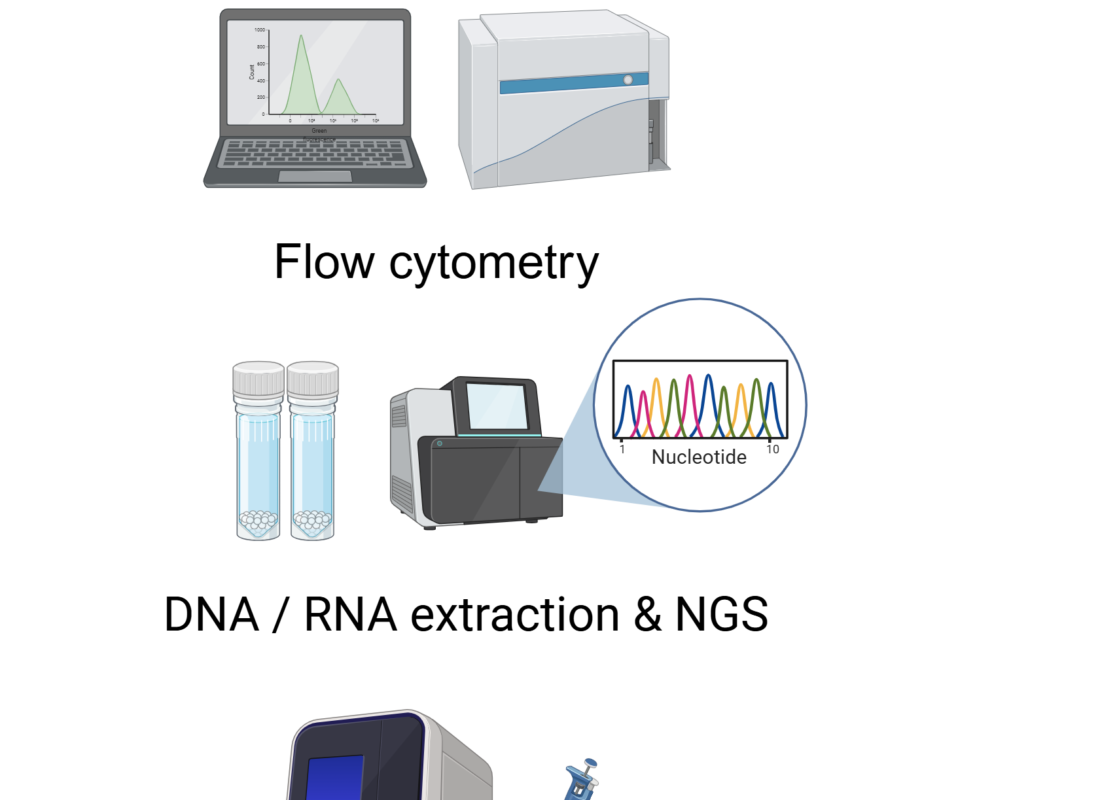
-Perform molecular and analytical techniques such as flow cytometry, DNA / RNA extraction and qPCR

-Record and interpret experimental data

-Write an MSc thesis / article manuscript if required

-Present data according to conventional scientific standards

Our requirements

-EU citizen or international student registered at a Dutch university

-Enrolled in last year HBO or Life Sciences, Biology, Microbiology MSc program or a related field

-Overall interest in microbiology and/or molecular biology

-Previous experience in analytical and molecular biology techniques such as flow cytometry, nucleic acid extraction and PCR is a plus.

-Good verbal and written communication skills in English

-Reliable, organized and able to work in large, international teams

Your benefits

-Gain hands-on laboratory experience in various molecular & analytical techniques

-Receive close guidance via weekly / biweekly meetings

-Experience the multidisciplinary and collaborative research environment at Wetsus

-Join a large pool of thesis/internship students in an international working environment

-Allowance of 425 EUR per month. Grant holding students (i.e. Erasmus or other) receiving financial support of less than 425 € per month can apply for a top-up supplement to the maximum allowance.

How to apply:
Interested students are invited to send a motivation letter (max. 1 page) and a CV (max. 2 pages) to Adel Bou Alia (Adel.BouAlia@Wetsus.nl) or via the application form below. In the email, please indicate anticipated starting month and how long you are available.

  • Max. bestandsgrootte: 1 GB.
  • Max. bestandsgrootte: 1 GB.

Towards an economy of value preservation | By Niels Faber

Abstract

The realisation of a circular economy has thus far unfolded under the assumption that it would fit within existing economic arrangements. In practice, we witness many circular initiatives struggling to give shape to their ambitions, let alone develop to maturity. These past months, various material recycling organisations terminated their activities, seeing virgin alternatives from other parts of the world flooding the market at prices against they cannot compete. If the transition towards a circular economy (i.e. an economy of value preservation) is to be taken seriously, a new perspective on value in our economic system seems unavoidable, as the rewriting of the rules of the economic game. At this moment, current perceptions of value stand in the way of this transition both at micro as well as macro levels. Several contours for a collective exploration of new directions of value and economic configuration that foster circular transition will be addressed.

Searching Innovation for the Common Good | By Cees Buisman

Abstract

In his key note he will conclude after a life of innovations that it is impossible that humanity will stay within the save planetary boundaries with innovation only. We should be more critical about the behaviour of the rich population in the world and more critical about new innovations that prove to be dangerous, like the PFAS crisis shows at this moment. In his keynote he will investigate how to look at the world that can stay within the save planetary boundaries, how should we change ourselves? It is clear if we only talk about the words of science and systems we miss the essential words of how we should cooperate and change ourselves. And his search for coherent save innovations. Which innovations will be save and will lead to a fair and sustainable world? And will lead to a world we want to live in.

Future-fit economic models: What do they have in common – how can they join forces? | By Christian Felber

Abstract

There is a growing number of new sustainable, inclusive, cohesive, participatory, just and humane economic models. A possible next step in the discourse about them is the comparative analysis in order to find out key commonalities, potential synergies, and “requirements” for a future-fit economic model. The author and initiator of the Economy for the Common Good provides an overview of these „new sustainable economic models“ and compares them according to underlying values, principles, and practical ways of implementation. The keynote addresses the cooperative spirit of the conference and prepares the ground for its public highlight on the eve of June 3rd, the round table with representatives of diverse future-fit economic models.

The era of postgrowth economics | By Matthias Olthaar

Abstract

The scientific debate on whether economies should always continue to grow increasingly becomes a political and societal debate. On the one hand further growth for the most affluent countries seems neither possible nor valuable, but on the other hand there is still lack of understanding and knowledge what a non-growing economy should look like and could best be governed. In this lecture we discuss various policy measures that can be realistically implemented, take into account government finances and aim at a higher quality of life despite a non-growing economy.

Democratic principles for a sustainable economy | By Lisa Herzog

Abstract

Democracy is under pressure, and less and less able to stir the economy into a sustainable direction. Therefore, to stabilize democracy and to make possible the socio-ecological transformation of the economy, democratic principles need to be implemented directly in the economy. This is not only a matter of morality, but also has practical advantages. Democratizing the economy can increase legitimacy and take advantage of the “knowledge of the many” to accelerate the transformation. Democratic practices, especially deliberation, allow bringing together different forms of knowledge, which is crucial for the local implementation of principles of social and ecological sustainability. This talk explores what this idea means in more concrete terms, from democratic participation in the workplace to the democratization of time.

Market, state, association, and well-being. An historical approach | By Bas van Bavel

Abstract

Over the past decades, markets have conventionally been seen as the best instrument to stimulate economic growth and enhance prosperity and well-being. The automatic link between markets and economic growth is increasingly questioned, however, as well as the automatic link between economic growth and enhancement of well-being. This has led to attempts to capture well-being development more directly than through GDP per capita figures and has produced a more variegated picture of well-being growth. Also, this has led to a shift of focus to other coordination systems than the market, as primarily the state but increasingly also the association. Analyses of the historical record suggest that especially the latter could be a vital component in future well-being.