
Menu

wetsus
news

We are deeply saddened to inform you that our dear colleague, Prof.dr.ir. Karel Keesman, passed away on May 5.

Professor Keesman will be greatly missed by the entire Wetsus community: scientists, staff, PhD researchers, students, and the many partners from companies and universities with whom we collaborate. We will miss his encouraging personality, his warmth, and his exceptional modelling expertise. He played a key role within our scientific staff.

Karel was associated with Wetsus almost from the very beginning—first as a university supervisor and later, from 2009 onward, as Senior Advisor and member of the Wetsus staff. He supervised many PhD researchers and was a highly respected lecturer in the Master Water Technology program.
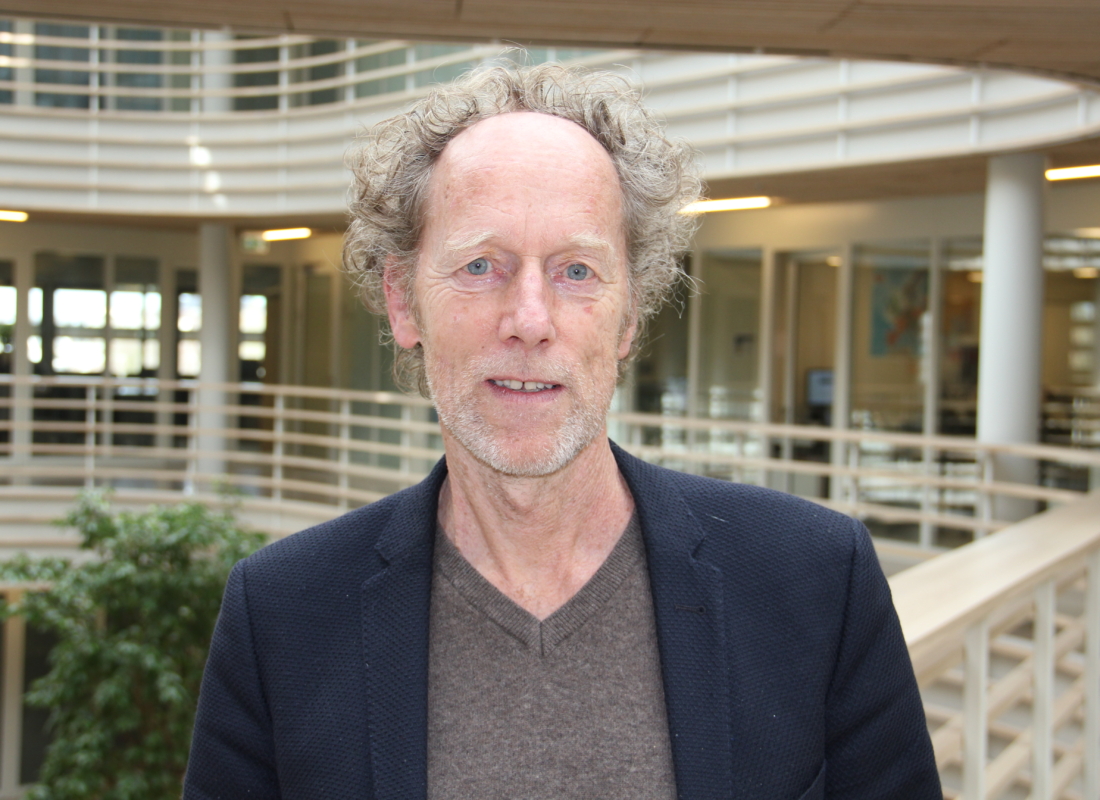
 

He will be remembered as an inspiring scientist and a leading expert in mathematical modelling applied to water technology. Karel was always driven by meaningful innovation and collaboration. His contributions include work on sulfur-oxidizing bioreactors, intelligent sensors for drinking water quality, and AI applications for water infrastructure management.He deeply valued the interdisciplinary environment at Wetsus, where he could work closely with both industry and fellow scientists. His efforts have been crucial to the successful development of Wetsus. Karel’s colleagues will continue to remember his enthusiasm and warmth, with which he made everyone feel welcome. Many PhD researchers grew both as scientists and as individuals through his guidance and dedication. He was always generous with his time, ideas, and curiosity, and he was open to every exchange of thought.

We have lost a great colleague and friend. We will miss Karel dearly and are deeply grateful for all he has given us. Through the example he set and the people he inspired, his legacy will live on.

Wetsus ecosystem recognized as blueprint for future EU Innovation

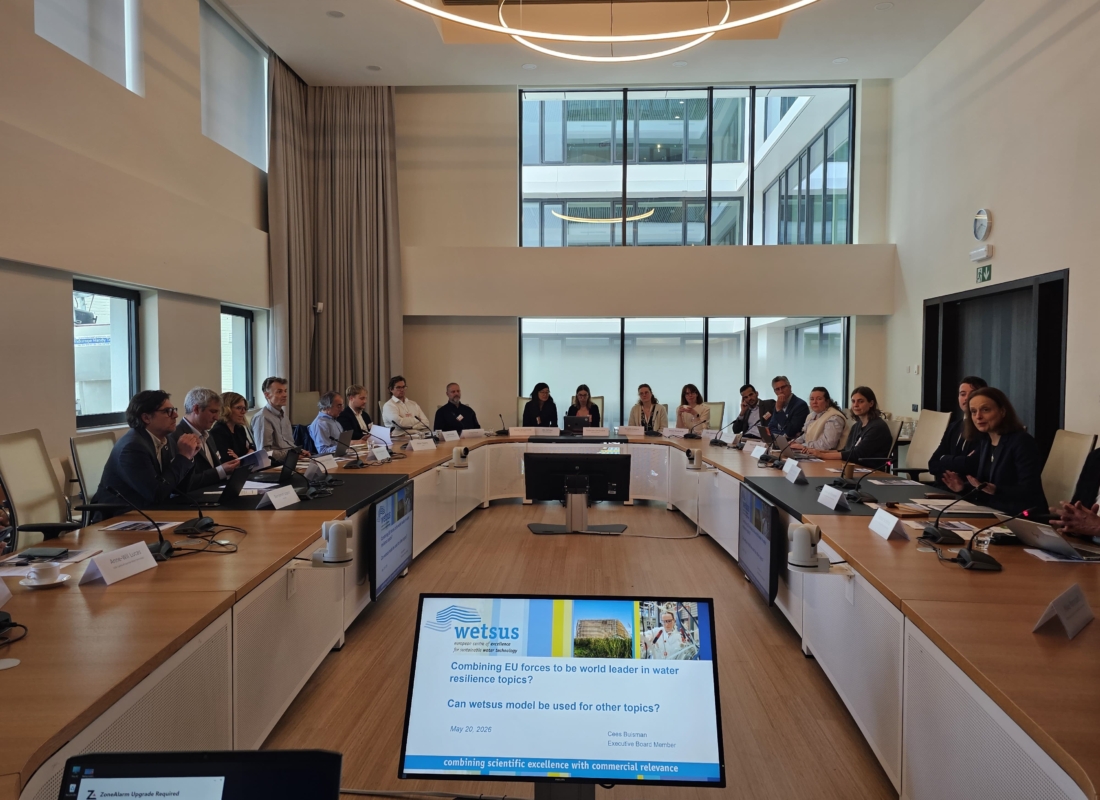
On 20 May 2026, Wetsus hosted a meeting at the Permanent Representation of the Kingdom of the Netherlands to the European Union on innovation ecosystems.

During this session, Cees Buisman shared Wetsus’ experience in orchestrating breakthrough innovation in water technology, highlighting key achievements and lessons learned. The event brought together representatives from the European Commission, Water4All CEO Benjamin Lopez, and ERRIN Director Pirita Lindholm.

Lindholm described the Wetsus model as a leading example of #PlaceBasedInnovation and emphasized its relevance for future EU investment priorities and the Multiannual Financial Framework (#MFF). From the European Commission side, the importance of missions, partnerships, and breakthrough innovation was also highlighted. Participants were highly impressed by the effectiveness and strong trust-based collaboration within the Wetsus ecosystem. The model was widely regarded as a unique example in Europe, with strong potential for replication in other regions. As a follow-up, a special mission during the European Water Technology Week in October is being considered.
Wetsus ecosystem recognized as blueprint for future EU Innovation

Upcoming 14 new PhD Projects

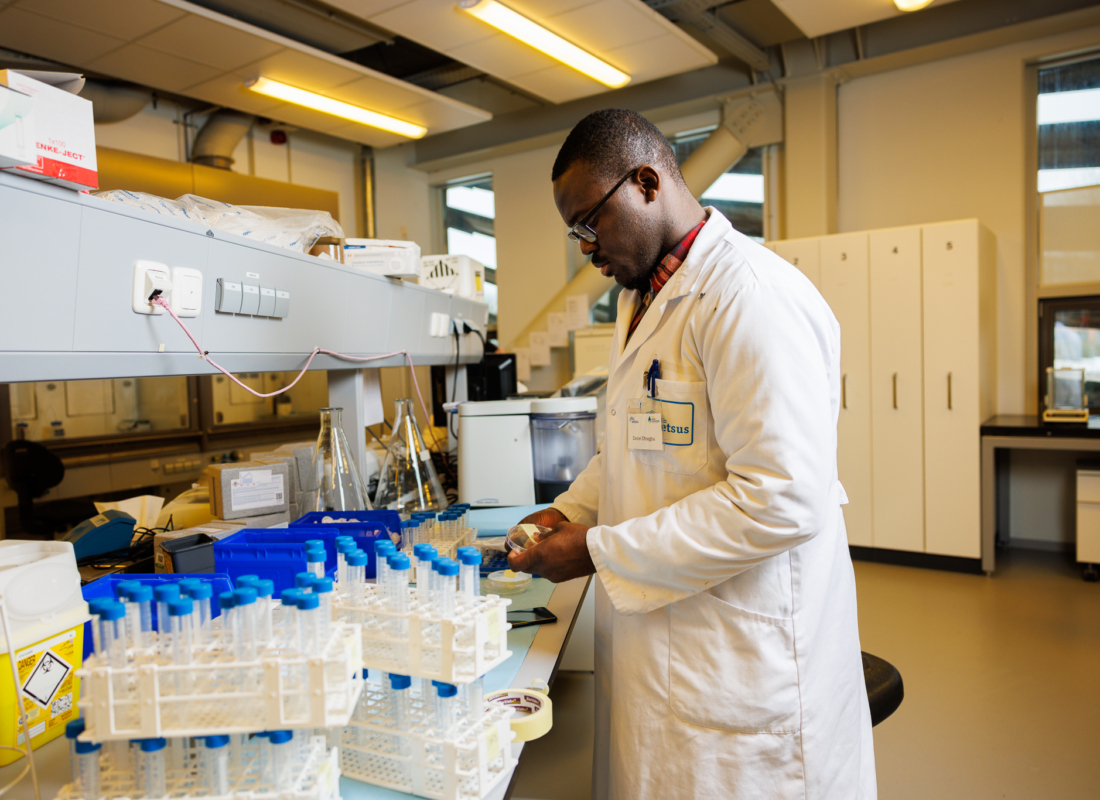
This March, Wetsus opened 14 PhD positions across a remarkably diverse range of research topics, reflecting the breadth of innovation needed to tackle today’s water, circular economy, and sustainable agriculture challenges. In the last week of May and the first week of June, we are entering the final selection phase, welcoming shortlisted candidates to Wetsus for our Recruitment Challenge. During this intensive selection process, candidates present their MSc research, complete a proposal writing exercise, and participate in live interviews with university supervisors and Wetsus staff. Read more
Upcoming 14 new PhD Projects

EU-funded Agro2Circular project wrapped up successfully, two more End of Waste projects in the making 

In Agro2Circular, with its 40 partners in 9 countries, ranging from companies to policy stakeholders, research was aimed at developing a systemic solution for upcycling agri-food residues and multilayer packaging into high-value products through advanced recycling technologies and digital circularity tools. 
In it, the Wetsus Biopolymers from Water theme showed the great opportunities ahead for the biopolymer PHA. It can be extracted from various sources and used in a real industrial supply chain, in a scalable yet flexible manner. Other partners in the project made significant advances in biopolymer production and recycling.
Now, two new EU-funded projects have recently been granted to build upon this research and make steps towards ‘End of Waste’ - clean circular materials made from waste. In PHACTUS, Wetsus will develop novel processing and recycling approaches to engineer PHA-materials properties and model the fate of unwanted chemicals. In the flagship project SOWISE+, Wetsus will process waste-derived cellulose and PHAs into advanced composites, controlling quality of material properties and controlling the content of unwanted substances in the recycled material.
EU-funded Agro2Circular project wrapped up successfully, two more End of Waste projects in the making 

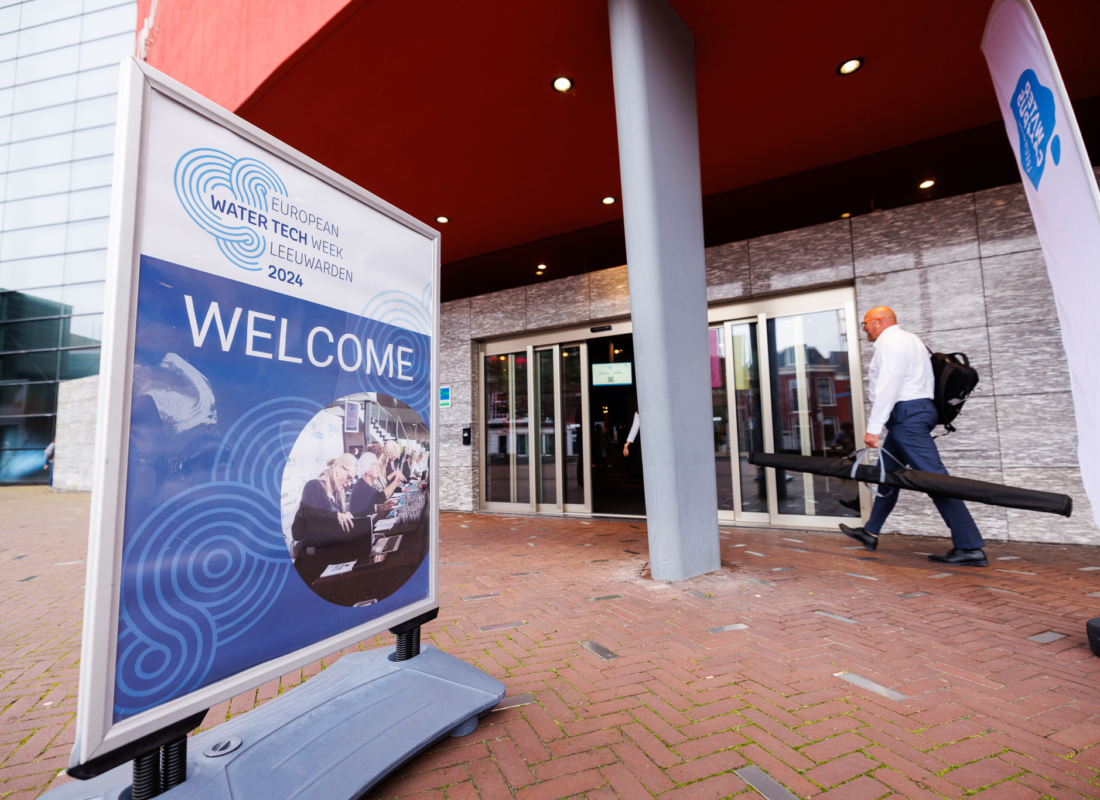
Registration is now open for European Water Technology Week 2026!

Join Europe’s leading water technology event and connect with researchers, innovators, entrepreneurs, investors and industry leaders from around the world.

Over three inspiring days, European Water Technology Week (EWTW) brings together science, innovation and business to accelerate solutions for global water challenges. Discover the latest breakthroughs, gain insights from leading experts, explore cutting-edge technologies, and connect with the people shaping the future of water.

Highlights

  • Inspiring keynote speakers and expert sessions
  • The Wetsus Congress and leading scientific presentations
  • Innovation pitches and breakthrough technologies
  • Networking and matchmaking opportunities
  • An international exhibition showcasing the latest developments in water technology

Explore the full program, including all scientific sessions, and secure your place today: www.europeanwatertechweek.eu

Register now and be part of the future of water technology.
Registration is now open for European Water Technology Week 2026!

Towards an economy of value preservation | By Niels Faber

Abstract

The realisation of a circular economy has thus far unfolded under the assumption that it would fit within existing economic arrangements. In practice, we witness many circular initiatives struggling to give shape to their ambitions, let alone develop to maturity. These past months, various material recycling organisations terminated their activities, seeing virgin alternatives from other parts of the world flooding the market at prices against they cannot compete. If the transition towards a circular economy (i.e. an economy of value preservation) is to be taken seriously, a new perspective on value in our economic system seems unavoidable, as the rewriting of the rules of the economic game. At this moment, current perceptions of value stand in the way of this transition both at micro as well as macro levels. Several contours for a collective exploration of new directions of value and economic configuration that foster circular transition will be addressed.

Searching Innovation for the Common Good | By Cees Buisman

Abstract

In his key note he will conclude after a life of innovations that it is impossible that humanity will stay within the save planetary boundaries with innovation only. We should be more critical about the behaviour of the rich population in the world and more critical about new innovations that prove to be dangerous, like the PFAS crisis shows at this moment. In his keynote he will investigate how to look at the world that can stay within the save planetary boundaries, how should we change ourselves? It is clear if we only talk about the words of science and systems we miss the essential words of how we should cooperate and change ourselves. And his search for coherent save innovations. Which innovations will be save and will lead to a fair and sustainable world? And will lead to a world we want to live in.

Future-fit economic models: What do they have in common – how can they join forces? | By Christian Felber

Abstract

There is a growing number of new sustainable, inclusive, cohesive, participatory, just and humane economic models. A possible next step in the discourse about them is the comparative analysis in order to find out key commonalities, potential synergies, and “requirements” for a future-fit economic model. The author and initiator of the Economy for the Common Good provides an overview of these „new sustainable economic models“ and compares them according to underlying values, principles, and practical ways of implementation. The keynote addresses the cooperative spirit of the conference and prepares the ground for its public highlight on the eve of June 3rd, the round table with representatives of diverse future-fit economic models.

The era of postgrowth economics | By Matthias Olthaar

Abstract

The scientific debate on whether economies should always continue to grow increasingly becomes a political and societal debate. On the one hand further growth for the most affluent countries seems neither possible nor valuable, but on the other hand there is still lack of understanding and knowledge what a non-growing economy should look like and could best be governed. In this lecture we discuss various policy measures that can be realistically implemented, take into account government finances and aim at a higher quality of life despite a non-growing economy.

Democratic principles for a sustainable economy | By Lisa Herzog

Abstract

Democracy is under pressure, and less and less able to stir the economy into a sustainable direction. Therefore, to stabilize democracy and to make possible the socio-ecological transformation of the economy, democratic principles need to be implemented directly in the economy. This is not only a matter of morality, but also has practical advantages. Democratizing the economy can increase legitimacy and take advantage of the “knowledge of the many” to accelerate the transformation. Democratic practices, especially deliberation, allow bringing together different forms of knowledge, which is crucial for the local implementation of principles of social and ecological sustainability. This talk explores what this idea means in more concrete terms, from democratic participation in the workplace to the democratization of time.

Market, state, association, and well-being. An historical approach | By Bas van Bavel

Abstract

Over the past decades, markets have conventionally been seen as the best instrument to stimulate economic growth and enhance prosperity and well-being. The automatic link between markets and economic growth is increasingly questioned, however, as well as the automatic link between economic growth and enhancement of well-being. This has led to attempts to capture well-being development more directly than through GDP per capita figures and has produced a more variegated picture of well-being growth. Also, this has led to a shift of focus to other coordination systems than the market, as primarily the state but increasingly also the association. Analyses of the historical record suggest that especially the latter could be a vital component in future well-being.